


Amora: Romance Novels & Books
Riseforward Ltd.
I opened Amora expecting a straightforward romance-reading app, but its appeal became clearer after using it as part of an ordinary evening routine. This is a Books & Reference app from Riseforward Ltd. focused on romantic novels and shorter romantic fiction, with listening as an important part of the experience. It is free to install, although optional purchases range from $6.99 to $519.99 per item, so the way you browse and decide what to continue matters.
My first impression was that Amora is aimed at readers who want a dedicated place for romance rather than a broad library covering every possible subject. That narrow focus is useful: I did not have to filter through unrelated genres before finding something with the emotional tone I wanted. At the same time, it means this is not an all-purpose reading replacement. If your interests move between romance, history, science, news and general reference material, a wider reading service may fit your routine better.
How I built a comfortable everyday reading routine
The simplest way to use Amora is to treat it as a choice-and-continue app rather than a catalogue you endlessly browse. I would open it when I had a clear mood in mind, sample a few romance stories, and then commit to one instead of collecting too many unfinished titles. That small habit makes the app feel less cluttered and helps the listening side become part of the day instead of a feature I forget exists.
A realistic use case is a commute or household task where reading a screen is inconvenient. I could start a romantic story before beginning a walk, cooking dinner or tidying a room, then return to the same title later for a conventional reading session. This combination is more valuable than either format alone. Listening keeps a story moving when my hands are occupied, while reading is better when I want to slow down, revisit a scene or pay closer attention to character details.
I also found that short romantic fiction serves a different purpose from a full novel. A short story is easier to choose when I only have a brief break, while a longer work suits a regular evening session. Thinking about available time before selecting something is one of the most practical ways to avoid abandoning a title halfway through. Amora works best when I use its range of story lengths deliberately rather than expecting every title to suit every moment.
Related News

Why WhatsApp Messenger Still Makes Everyday Communication Feel Easy

Jurassic World: The Game Is the Better Dino Tycoon for Strategic Players

Threads in Real Life: Who Should Join, Lurk, or Leave

How SHEIN Turned Shopping Into an Endless Content Feed

How to Make Fortnite Feel Smarter on Mobile

Should You Switch to Microsoft Outlook on Mobile?
The app’s Teen content rating is worth taking seriously. Romance can cover very different levels of intensity and emotional subject matter, so I would not hand over a device to a younger reader simply because the app is listed in a general reading category. For my own use, the rating is a reminder to check the tone of a story before settling into it, especially if I am choosing something for a shared space or a family device.
Amora is free to begin with, which makes trying the reading experience relatively easy. The important distinction is between installing the app and treating its entire catalogue as unlimited. Optional purchases are part of the model, and the upper end of the listed range is substantial. I would therefore browse first, understand what is available without paying, and only spend after deciding that a particular story or access option genuinely suits my habits.
The app has a 4.3 average from around 1.6 thousand ratings, with more than 270 written reviews. That gives me a useful general signal that the experience works for many romance readers, but it is not a reason to assume it will match everyone’s preferences. Romance is especially personal: narration style, pacing, character themes and the balance between short fiction and longer novels can matter more than a general score.
Gallery
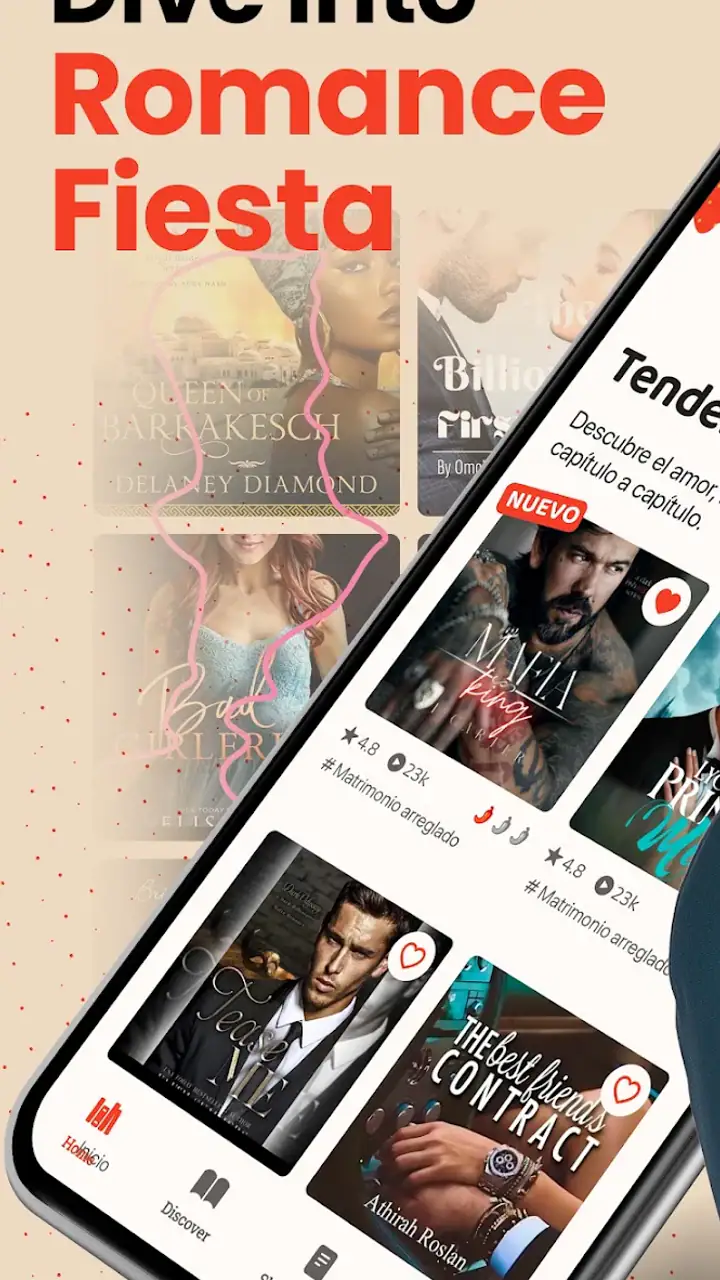
Small settings that deserve attention early
My advice is to spend a few minutes checking the app’s available playback and reading controls before starting a long title. Even when the default setup is usable, a reading app becomes much easier to live with when the text presentation and listening behavior match the way you actually consume stories. The best configuration for a quiet night is not necessarily the best one for a commute.
For listening, I would test the playback controls with a short section rather than beginning with a lengthy novel. This lets me decide whether the narration pace feels natural and whether I can pause and resume without losing my place. A slightly faster pace may work for familiar storytelling, while a slower pace can help with a more complicated plot or a story with many new character names.
For reading, I prefer a comfortable display over a visually impressive one. If the text feels cramped, I am more likely to stop early, even when the story itself is good. I would adjust the reading view before judging a title. That is a useful distinction because a poor first session can come from presentation fatigue rather than weak writing.
Notifications are another area I would review instead of accepting every default. A dedicated romance app can encourage regular reading, but interruptions can also make the experience feel noisy. I prefer reminders that support an existing habit, such as an evening reading window, rather than alerts that pull me back whenever I am doing something else.
Because Amora is available for Android devices running version 8.0 or later, compatibility is fairly approachable for people using older phones that still receive normal app support. I would still check the experience on the device I plan to use most. Reading and audio can place different demands on a phone, and a setup that feels fine on a newer handset may be less pleasant on an aging one with limited battery life or storage.
One practical setting habit is to separate discovery from consumption. I browse when I have time, then return to a chosen story when I want to read or listen. This reduces the temptation to make a new decision every time I open the app. It also makes it easier to notice whether I am genuinely enjoying a title or merely continuing to browse because nothing has held my attention.
Faster patterns for choosing and continuing stories
Experienced use is less about finding a secret button and more about repeating a sensible workflow. I would begin by choosing the format that fits the moment: a short romantic story for a limited break, or a longer novel for a session where I can return regularly. That single decision removes much of the friction that comes from starting a title with no realistic time available.
Another useful pattern is to give a story a fair but limited trial. I do not need to force myself through a title that fails to establish the right mood, yet I also avoid rejecting one after only a few distracted minutes. A focused opening session, with the display or playback adjusted properly, gives me a better basis for deciding whether to continue.
I would also keep the app connected to a specific routine. For example, I might reserve longer listening sessions for a walk and use shorter reading sessions before bed. The same story can feel different depending on the setting, so matching format to activity helps me understand whether I like the work itself or simply like the convenience of the moment.
When optional purchases appear, I would avoid making an immediate decision while caught up in a dramatic chapter. Romance is designed to create emotional momentum, and that can make a purchase feel more urgent than it really is. My preferred approach is to pause, check what the purchase unlocks, and compare it with how often I expect to use the app. This is particularly important because the purchase range extends from small individual items to much more expensive options.
A further habit is to keep expectations realistic about switching between reading and listening. I would not assume that every title will feel equally satisfying in both forms. Some stories depend heavily on visual pacing and rereading, while others are easy to follow while walking. If one format feels awkward, I would try the other before abandoning the story entirely.
Amora can also work as a low-pressure way to explore romance subgenres, but I would make notes mentally about what actually keeps me engaged. Do I prefer a quick emotional arc, a slower relationship, or a longer plot with more room for character development? Using those questions during browsing is more effective than selecting titles only because their descriptions sound dramatic.
Where the app’s focused design helps, and where it does not
The strongest part of Amora is its clear identity. I do not have to turn a general-purpose reading platform into a romance library through repeated searches. For a reader who already knows that romantic fiction is the main attraction, this focus can make the first step easier and the overall experience more coherent.
The listening emphasis is also meaningful. Many reading apps treat audio as an extra, but here it fits naturally with the subject matter and the way people often consume serialized or emotional fiction. I found the option useful when my eyes were tired or when I wanted a story in the background without committing to video entertainment.
The trade-off is breadth. A general ebook platform may offer stronger tools for people who read across many categories, while a dedicated audiobook service may be preferable for someone whose only priority is audio discovery and playback. Amora makes more sense when the combination of romance, novels, shorter stories and flexible consumption matters more than having the widest possible genre coverage.
The purchase model requires attention as well. Free entry is helpful, but it does not automatically mean that every desirable reading path will remain free. I would be cautious about building a daily habit around a title before understanding how access is handled. Readers who want a predictable subscription or a clearly defined ownership model may feel more comfortable with a different service.
There is also a difference between a catalogue designed for quick emotional engagement and a traditional book collection. If I want literary criticism, reference works, textbooks or a broad selection of established nonfiction, this app is simply not the right tool. Its value depends on wanting romance specifically, not on replacing every other reading resource on a phone.
The current version is 1.15.2, and the app has passed the early stage of being a brand-new experiment, having been released on May 8, 2025. That is useful context when deciding whether to make it part of a routine: the product is recent enough that I would keep an eye on how its reading experience develops, but established enough to try without treating it as an unfinished concept.
Questions I would answer before installing
If you mainly want romance novels and romantic short fiction, Amora is a sensible app to test because its purpose is immediately clear. If you want a broad digital library, I would start elsewhere. The focused catalogue is an advantage only when it matches your reading intention.
If you are wondering whether it works for occasional use, I think it does. You can approach it for a short story during a break or use audio during a routine task. The app becomes more rewarding with regular use, but it does not require every session to be a long reading commitment.
If you are deciding whether to pay, I would wait until the free experience has shown that the catalogue, format and tone fit you. Since individual purchases can vary widely in cost, a careful reader should identify exactly what is being offered before confirming anything. The free starting point is best treated as a chance to evaluate, not as a promise that all content will be included.
If you are choosing between reading and listening, I would use both rather than declaring one universally better. Reading gives me more control over pauses and rereading, while listening fits movement and chores. The right choice depends on the moment, and switching formats can keep a story useful throughout the day.
If you are concerned about suitability, remember the Teen rating and choose titles with your audience in mind. I would be especially careful when sharing the app with younger users, because the romance category can include themes that are not appropriate for every reader even when the interface itself looks simple.
My verdict after making the workflow repeatable
After settling into a routine, I see Amora as a focused romance companion rather than a universal book app. Its best qualities come together when I want a romantic story, need the choice of reading or listening, and prefer a dedicated catalogue over a huge but less targeted service. The free entry makes experimentation easy, while the purchase structure means I should remain deliberate about what I unlock.
I would recommend it to someone who regularly reads romance and wants shorter stories available alongside novels. I would also recommend it to a listener who likes fitting fiction around walks, chores or quiet travel. The most satisfying approach is to configure the reading and playback experience early, choose titles according to the time available, and avoid browsing endlessly once a promising story has been found.
I would skip it if my priority were nonfiction reference material, a broad multi-genre library, or a completely predictable payment arrangement. I would also avoid making it my only reading app if I need advanced tools associated with a much wider book ecosystem. Amora is more convincing when used for what it is designed to do, not when judged as a replacement for every alternative.
For me, the final decision comes down to fit rather than raw catalogue size. Riseforward Ltd. has made an app with a clear romantic-fiction identity, and the 100 thousand-plus install milestone suggests it has reached a meaningful audience. The smartest way to use Amora is to make its flexibility serve a real routine: choose with intention, listen when your hands are busy, read when you want control, and spend only after the experience has earned it.
That balance is why I would keep it on a phone belonging to a romance reader, while still pairing it with a broader service when my interests extend beyond love stories. Used with that expectation, Amora feels approachable, practical and genuinely enjoyable for the right audience.
FAQs for Amora: Romance Novels & Books
What is Amora: Romance Novels & Books?
Amora: Romance Novels & Books is a mobile reading app focused on romance fiction. It offers a catalog of serialized stories and novels covering popular themes such as contemporary romance, billionaire relationships, fantasy romance, drama, and emotional love stories. Readers can browse titles, open chapters, follow ongoing series, and discover new authors through a personalized reading experience.
Is Amora: Romance Novels & Books free to download and use?
The app can generally be downloaded for free, but access to all of its content may not be completely free. Some chapters or premium stories can require virtual coins, in-app purchases, or another form of payment, while selected content may be available without charge. Before starting a book, check its unlocking requirements and review any subscription or purchase details shown in the app.
How does chapter unlocking work in Amora?
Amora may allow readers to access initial chapters freely and then request coins or purchases to continue reading selected stories. The exact cost can vary depending on the title and chapter. Coins may be obtained through in-app purchases or promotional activities when available. Because pricing and rewards can change, users should confirm the current terms before spending money or committing to a long series.
Does Amora offer offline reading or require an internet connection?
An internet connection is normally useful for browsing the catalog, loading new chapters, synchronizing reading progress, and processing purchases. Offline availability can depend on the app version and whether a chapter has been cached or downloaded through an available feature. If offline reading is important to you, verify the download options inside the app rather than assuming every book can be read without connectivity.
Is Amora: Romance Novels & Books suitable for every reader?
Amora is primarily designed for readers who enjoy romance-centered fiction, including stories with relationship conflict, mature themes, emotional drama, and sometimes suggestive situations. The suitability of a particular book depends on its genre, age rating, and content warnings. Parents and younger readers should review the app-store rating and individual story descriptions, while adults should check privacy and purchase settings before using the platform.
Pros
- Large selection of romance novels across popular subgenres.
- Personalized recommendations make it easier to discover new stories.
- Offline reading supports enjoying books without a constant connection.
- Adjustable text settings improve comfort during longer reading sessions.
- Regularly updated catalog provides fresh titles for frequent readers.
Cons
- Some novels or chapters may require in-app purchases or subscriptions.
- The reading experience can vary depending on the book’s formatting.
- Content quality may be inconsistent across different authors and titles.
- Recommendations may become repetitive if your reading preferences are narrow.
- The app may use considerable storage when many books are saved offline.


